WizLeads


TL;DR
- Cognism: the platform-style ZoomInfo alternative, with Bombora intent on its Pro package. No price published.
- Seamless.AI: a contact database with no public price. Its credit rules sit in its help centre.
- SalesIntel: unlimited credits per user, with no price published.
- Apollo: Basic is $588 a year for one seat, billed annually, with 30,000 credits.
- Lusha: Starter is $449.10 a year for one seat, billed yearly, with 4,800 credits.
- UpLead: Essentials is $888 a year, billed annually, for 2,040 contact credits.
- Lead411: Spark is $490 a year for 12,000 exports.
- LinkedIn Sales Navigator: Core is US$1,079.88 a year for search and lists, with no emails.
- WizLeads: Freelancer is $468 a year on monthly billing, for Sales Navigator searches plus work emails. No intent data or org charts.
- Hunter: Starter is $408 a year, billed yearly, for 24,000 email credits.
ZoomInfo publishes no price for its platform plans, and Vendr's buyers report a $33,500 median contract. Seven of the ten alternatives publish an entry plan, from $408 to $1,079.88 a year for one seat. Cognism, Seamless.AI and SalesIntel publish none. Which one fits depends on the ZoomInfo job you are replacing.
A ZoomInfo contract can buy a platform, a contact database, or list building plus email, and few tools do all three. This list groups the alternatives by the job they replace. Each tool is priced for one seat from its vendor's own page, with the billing toggle named.
One of the ten is WizLeads, which turns a Sales Navigator search into a list with work emails. Its section says what that covers and what it leaves to ZoomInfo.
What ZoomInfo costs
ZoomInfo's pricing page shows no dollar figure on any plan. Some visitors see a version that lists six packages, from ZoomInfo Professional to ABM Enterprise, and others a version that groups its offers into use cases. The package version says pricing rests on "Features and functionality", "Number of licenses" and "Credit usage". Both versions send you to a "Get pricing" form, and ZoomInfo's license terms treat "pricing and access" as ZoomInfo's Confidential Information.
The only prices it lists sit on the separate GTM AI pricing page. There a data credit is one company, contact or intent record, and it costs $0.38 at the $1,000 spend tier.
ZoomInfo's FAQ page says its pricing does not start at $15,000, a figure it attributes to rival claims. A founder on r/micro_saas reports a different experience: a 7-person startup "just got quoted $15k/year minimum from ZoomInfo". ZoomInfo gives no figure of its own to settle the difference.
ZoomInfo also gives rules for a credit. The package version of the pricing page says "Each export costs one credit". ZoomInfo's help centre adds that monthly credits cannot be rolled over, and that bulk credits expire at the end of your contract term.
With no list price, the best dataset is buyer-reported. Vendr's ZoomInfo page shows a median of $33,500 a year. Vendr does not publish the seats, credits or modules behind those numbers. The GTM AI price ladder and the buyer data in full are in ZoomInfo's quote-only plans and credit tiers.
What ZoomInfo's contract says
ZoomInfo's 10-Q says its subscription contracts typically run one to three years and are non-cancelable. It also says ZoomInfo typically bills in advance, annually, semi-annually or quarterly. Three terms matter if you plan to leave.
- Auto-renewal. ZoomInfo's help article says accounts enrolled in auto-renewal can opt out in the Billing Portal at least 60 days before the renewal date. Only admins can do it, and it cannot be turned back on. Your own notice period sits in the Ordering Document, which is not public. Vendr's guide lists notice periods as typically 30 to 90 days.
- Cancellation. Section 3.1 of ZoomInfo's current license terms says the agreement "is not cancellable" and runs until it expires. The Ordering Document sets the term.
- The 2021 terms. An older version, still hosted at a dated URL, extended the term automatically 60 days before it ended, at the prior fee plus 10%. The current terms carry no such clause.
ZoomInfo's litigation, in short
ZoomInfo's 10-Q for the quarter to 30 September 2026, filed on 4 November 2026, lists two securities class actions, filed in September 2024 and June 2026. It also lists five derivative actions and two non-class complaints from groups of investment funds. It names putative class actions under Washington's Personality Rights Act, Quebec privacy law and Colorado's Prevention of Telemarketing Fraud Act.
The same filing says ZoomInfo signed a memorandum of understanding on 16 October 2026 to settle the first securities action for $44.0 million. It needs court approval and is described as not an admission of fault. ZoomInfo says it is entitled to recover $25.0 million under insurance policies, which covers defense costs as well as the settlement. The derivative suits, the fund complaints and the June 2026 suit stay open.
Separately, the FY2024 10-K records $30.1 million in charges for the 2021 publicity class actions, settled on 21 November 2024.
Which ZoomInfo job are you replacing?
Companies like ZoomInfo fall into three groups, because a ZoomInfo contract can buy three different things:
- The full platform. Intent signals, org charts and technographics layered onto contact records, sold to RevOps and marketing teams.
- A contact database. Search by title, company size and industry, then reveal an email or a phone number.
- List building plus email. Build a list of the right people and attach a work email so it can go into a sequencer.
The criterion for this list is which of those jobs a tool replaces, then what a year costs at its entry plan for one seat. Every tool gets the same four slots: what it replaces, the price with its billing toggle, what one credit buys, and where it falls short of ZoomInfo.
| # | Tool | Job it replaces | Entry plan and billing | Per year, one seat |
|---|---|---|---|---|
| 1 | Cognism | Platform and database | Quote only | Not published |
| 2 | Seamless.AI | Database | No public price | Not published |
| 3 | SalesIntel | Database | "Request Pricing" | Not published |
| 4 | Apollo | Database | Basic, billed annually | $588 |
| 5 | Lusha | Database | Starter, billed yearly | $449.10 |
| 6 | UpLead | Database | Essentials, billed annually | $888 |
| 7 | Lead411 | Database | Spark, annual | $490 |
| 8 | LinkedIn Sales Navigator | List building | Core, annual | US$1,079.88 |
| 9 | WizLeads | List building plus email | Freelancer, monthly billing | $468 |
| 10 | Hunter | Email finding | Starter, billed yearly | $408 |
Replacing the platform or the database, on a quote
These three show a sales button where a paid price would be.
1. Cognism: platform-style data, quote only
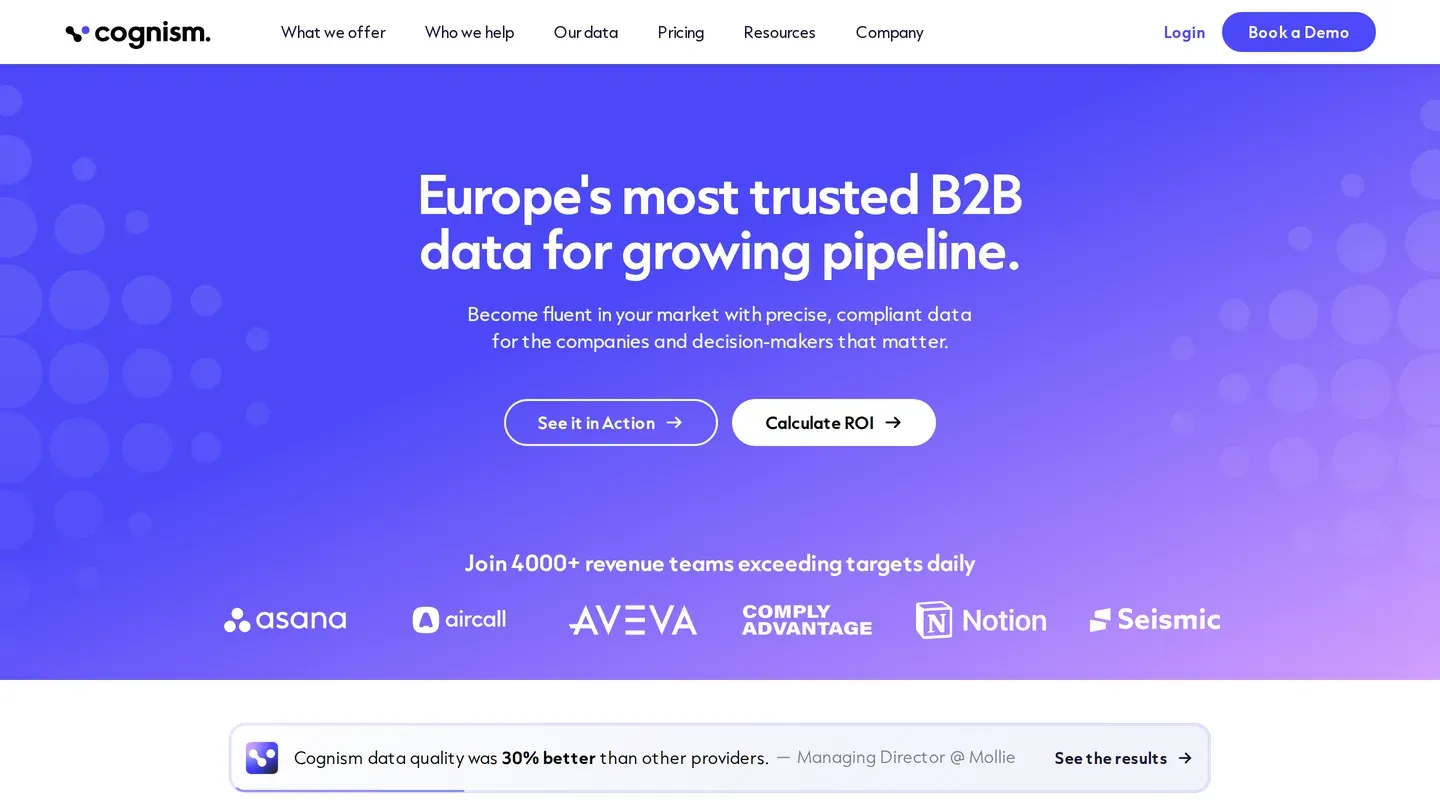
Replaces. The contact database and part of the intent layer. Cognism's pricing page says it uses Bombora's Company Surge data, and admins can pick up to 12 intent topics from over 11,000. The feature table lists intent on the Pro package only.
Price. Not published. Standard and Pro each include 5 seats, and the buttons read "Talk to sales" and "Talk to an expert". As a buyer-reported reference, SpendHound puts average Cognism spend at $20,536 a year for companies of 50 to 1,000 employees, from 19 customers.
One credit. One credit is one revealed contact. Viewing a contact you already revealed is free, and a credit is spent again only if that contact changes jobs.
Falls short of ZoomInfo. You get no price to test against a budget before a sales call, and intent is on Pro only.
2. Seamless.AI: a contact database with no public price
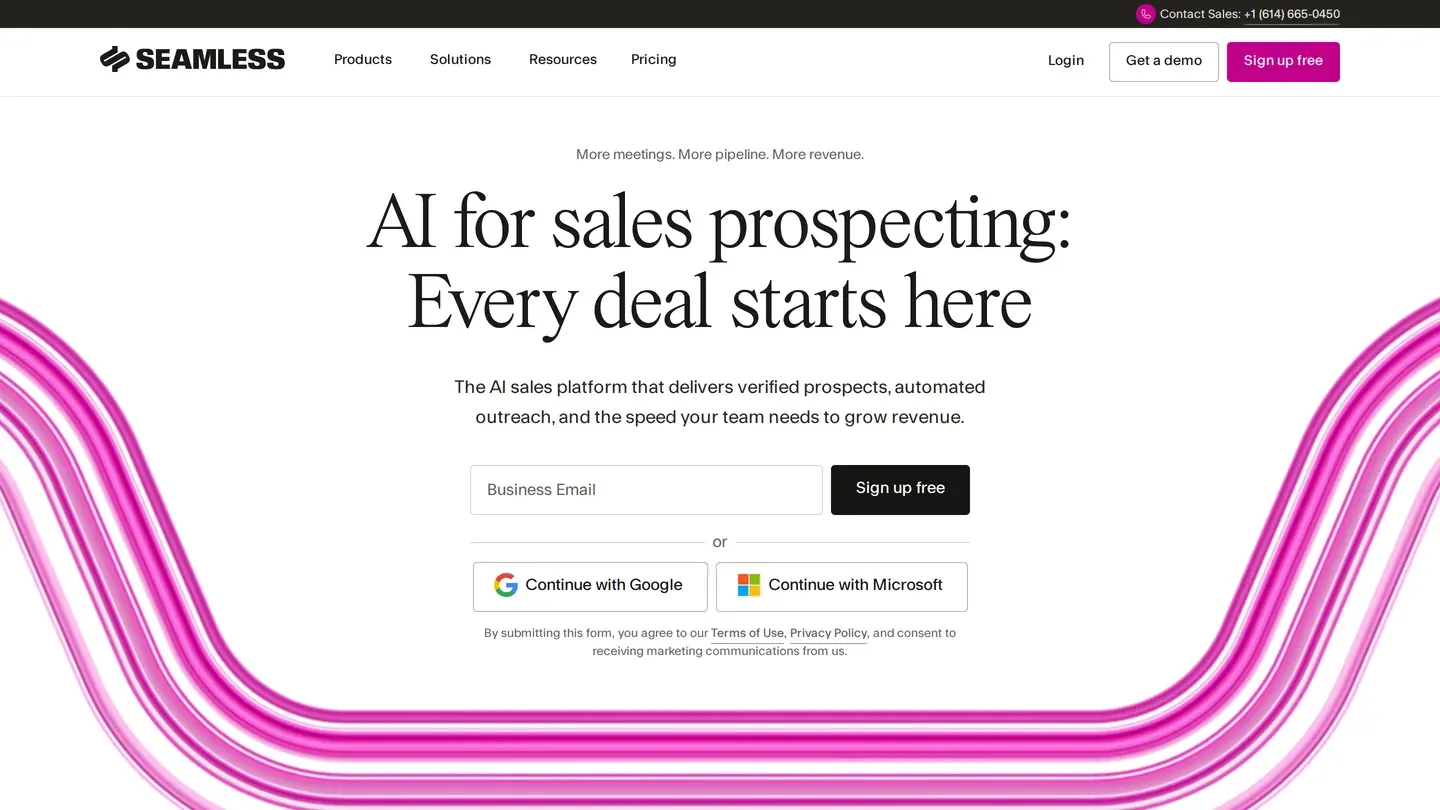
Replaces. The contact database. A search researches a contact, and the Find button fills in the profile, including emails and phone numbers.
Price. Not published on its public site: the pricing page now redirects to a "Get a demo" form. Seamless.AI's help article on credit and license types lists credits instead. Free gets 50 that do not replenish, Basic gets 250 a month and Pro gets 10,000 a month. A legacy Pro license with 1,000 credits a day is closed to new buyers. It gives no dollar figure.
One credit. Researching a contact costs 1 credit per contact, and so does the Find button. The article does not say whether a lookup that finds nothing is charged.
Falls short of ZoomInfo. You cannot size a bill without a demo, and the Free license's 50 credits do not refill.
3. SalesIntel: unlimited credits per user, no price
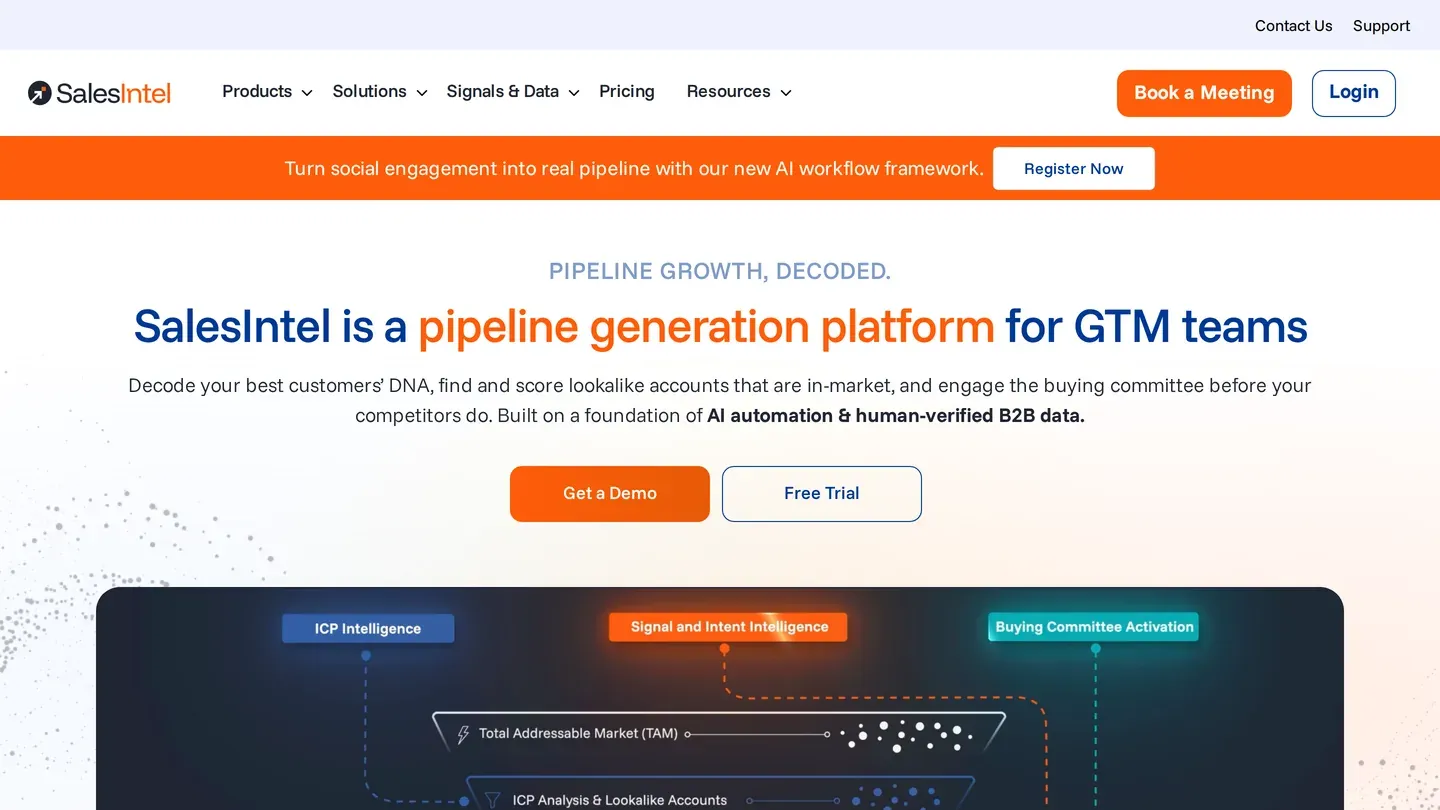
Replaces. The contact database. SalesIntel's homepage claims 200M+ verified B2B contacts. That is its claim, not a tested figure.
Price. SalesIntel's pricing page shows "Request Pricing" and no dollar figure.
One credit. Export credits and enrichment credits are both listed as "Unlimited credits/user/month". Research on Demand gets 10 credits per user a month.
Falls short of ZoomInfo. "Unlimited" is counted per user per month. The page asks you to request pricing and does not say how users are billed. Basic intent is included, and Advanced intent is an add-on.
Replacing the database, self-serve
These four publish a price you can pay without a sales call.
4. Apollo: $588 a year for one seat
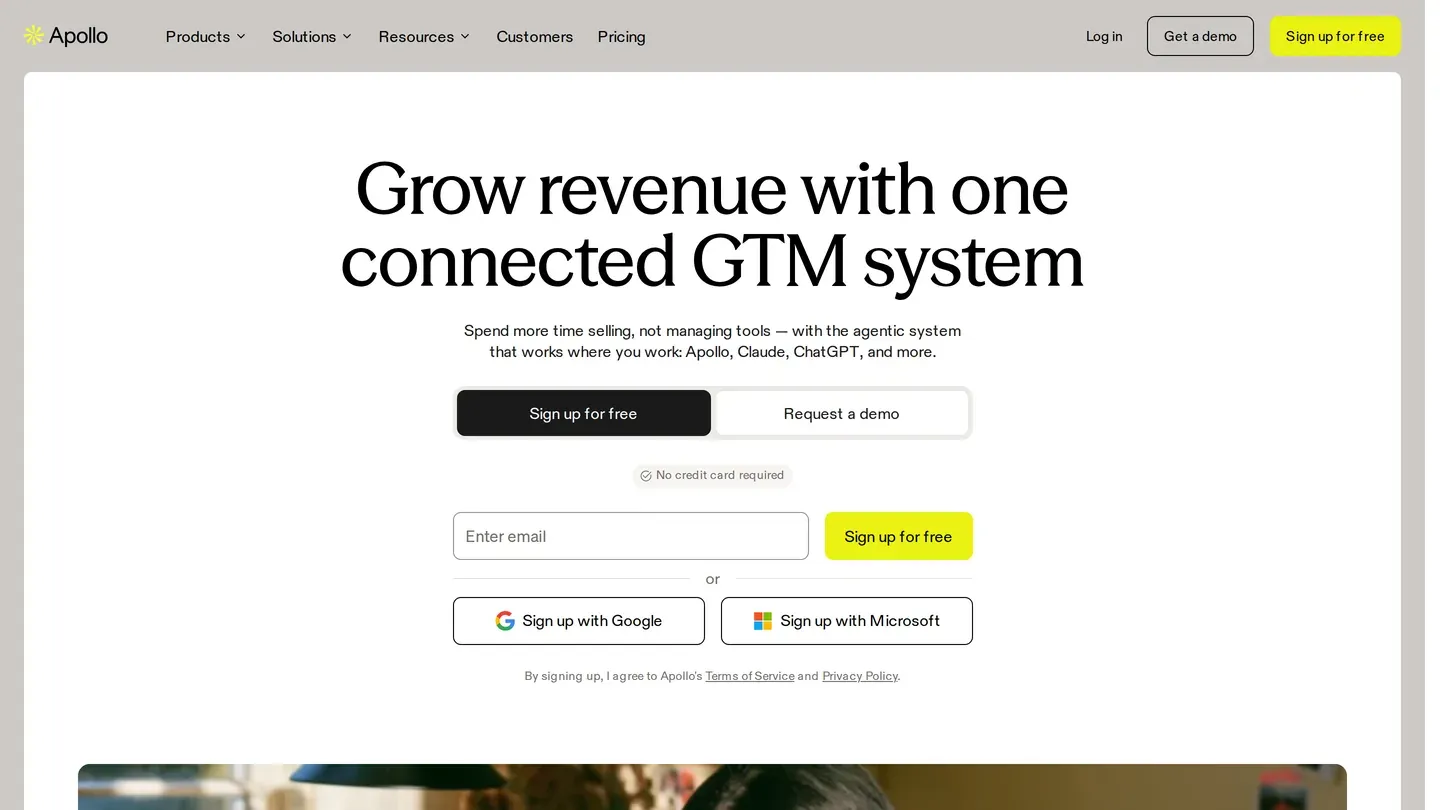
Replaces. The contact database. In a ZoomInfo vs Apollo comparison, the first difference is that Apollo prints its prices.
Price. On Apollo's pricing page, billed annually and per seat per month, Basic is $49 with 30,000 credits per seat a year. Professional is $79 with 48,000. Organization is $119 with 72,000 and a 3-seat minimum. Basic for one seat is $588 a year, and Organization for its 3 seats is $4,284. On the monthly toggle Basic is $65. Free gives 900 credits per seat a year.
One credit. An email costs 1 credit and a phone number costs 8, from one shared pool. Apollo's Understand Email Statuses help article says it charges no email credit for a contact without a known, valid email address.
Falls short of ZoomInfo. Phones cost 8 credits, so a seat's 30,000 credits cover 3,750 phone numbers if they buy nothing else.
5. Lusha: $449.10 a year for one seat
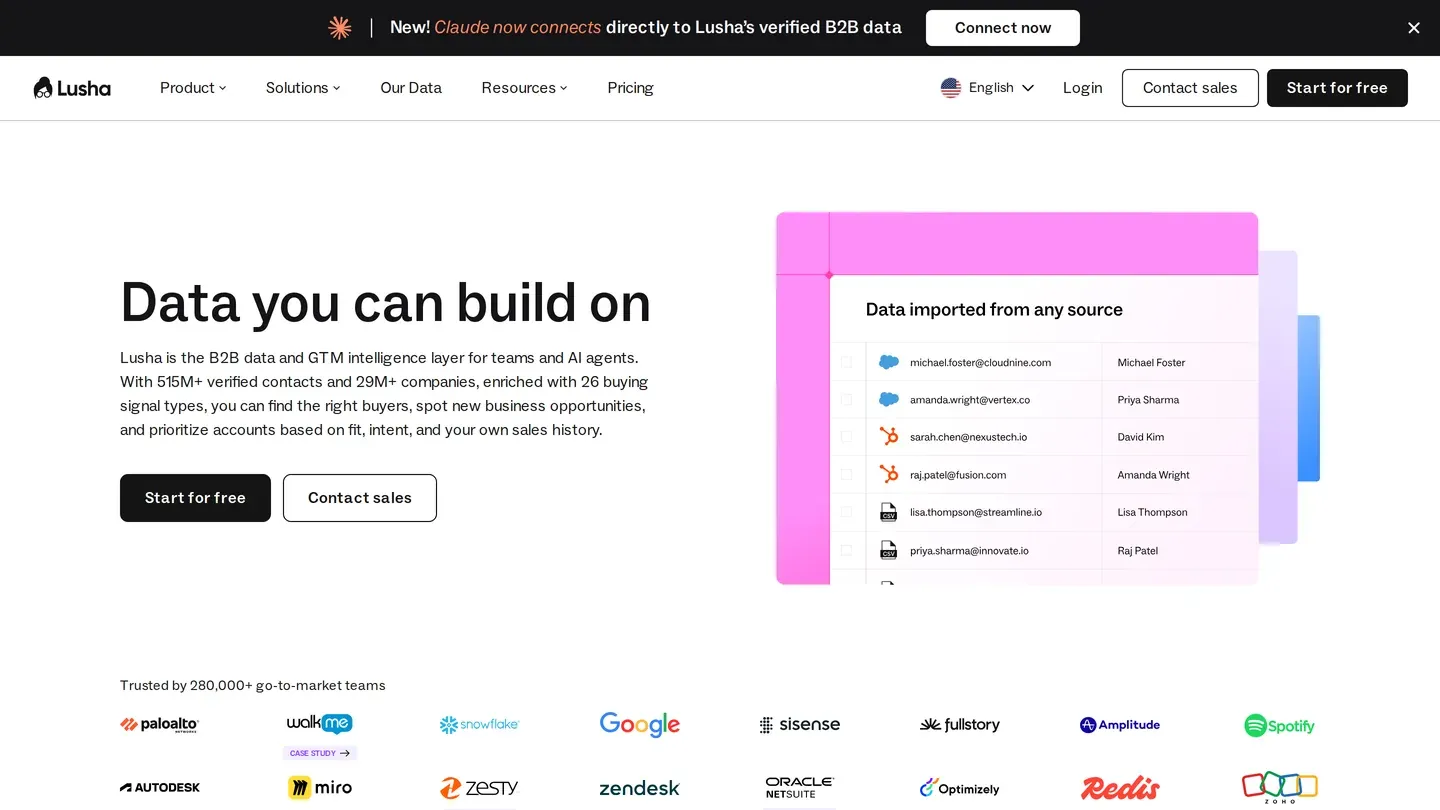
Replaces. A contact database where each email or phone number is a separate reveal. In a Lusha vs ZoomInfo decision, Lusha's side is a price you can read.
Price. On Lusha's pricing page, billed yearly, Starter is $37.45 a month for 4,800 credits a year. Pro is $52.45 for 7,200. Premium is $299.95 for 40,800 at its default slider setting. Scale is custom. Starter for one seat is $449.10 a year in the page's own price data. That is 30 cents under 12 times the card's $37.45. Monthly billing puts Starter at $49.90 for 400 credits. Free is 40 credits a month.
One credit. Revealing a verified email costs 1 credit and a phone number costs 5. Lusha contradicts itself on misses: its FAQ says a lookup that finds no match costs nothing, while its API docs say a minimum of 1 credit per request, even with no results.
Falls short of ZoomInfo. Starter's 4,800 credits buy 4,800 emails or 960 phone numbers a year, so it suits revealing contacts one by one, not building bulk lists.
6. UpLead: $888 a year on Essentials
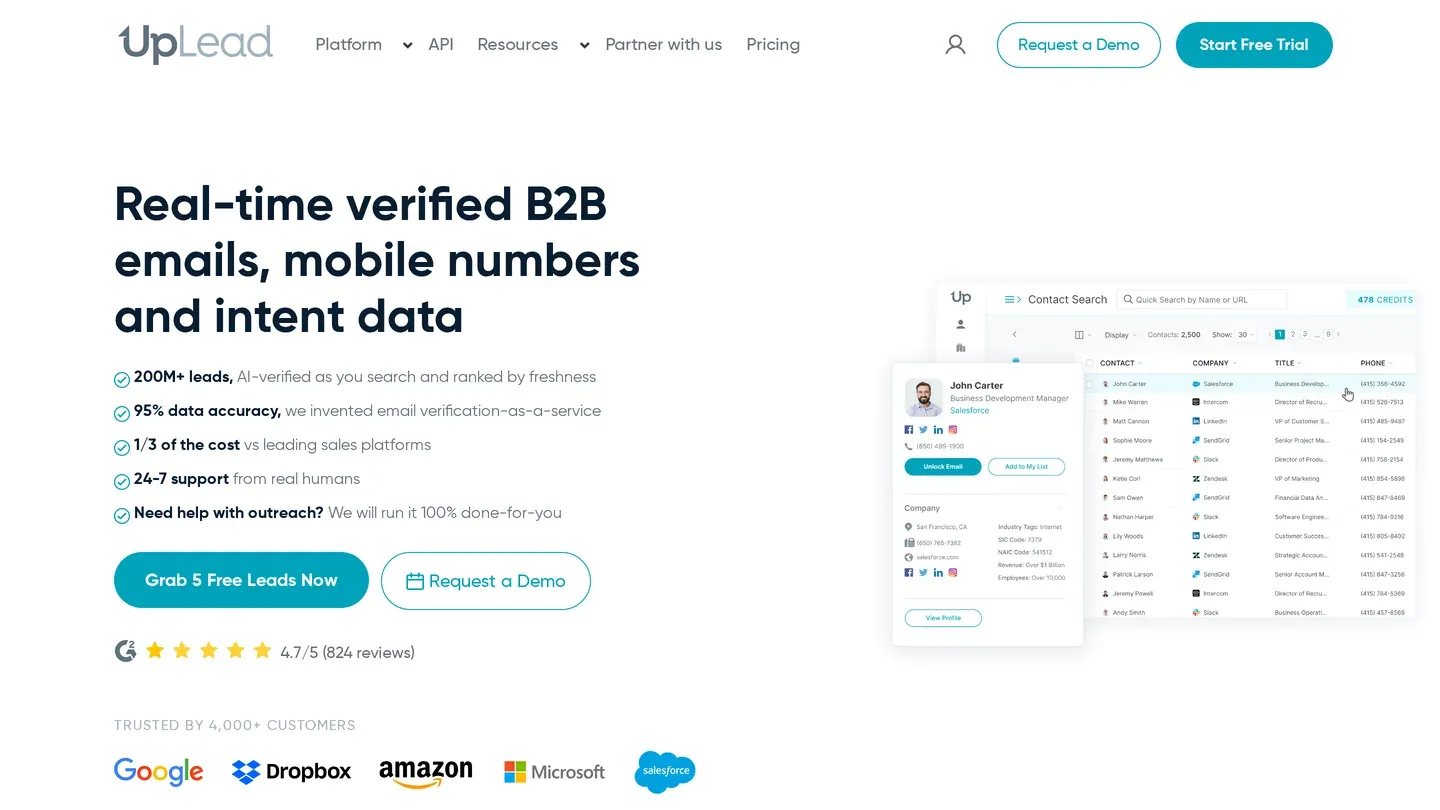
Replaces. The contact database, with an email and a mobile number in one credit.
Price. On UpLead's pricing page, billed annually, Essentials is $74 a month for 2,040 credits a year and Plus is $149 for 4,800. Monthly, Essentials is $99 for 170 credits. Professional is annual only, with custom credits. Essentials billed annually is $888 a year. Extra credits cost $0.60 on Essentials and $0.50 on Plus. The free trial lasts 7 days with 5 credits.
One credit. UpLead says one credit is one contact, with access to the email and the mobile direct dial.
Falls short of ZoomInfo. Essentials is 2,040 contacts a year. Free, Essentials and Plus are single-user accounts.
7. Lead411: $490 a year on Spark
Replaces. The contact database, metered in exports instead of credits.
Price. On Lead411's pricing page, Spark is $49 a month for 1,000 exports a month, or $490 a year for 12,000. Ignite starts at $150 a month. Blaze offers unlimited exports with no price shown. The free trial is 7 days with 50 exports.
One credit. The meter is an export, and unused exports roll over to the next billing cycle. Lead411 contradicts itself on caps. Its pricing FAQ says there are "no data caps or daily limits", and its homepage says "without credit limits or export caps", while Spark is capped at 1,000 exports a month.
Falls short of ZoomInfo. Annual Spark lists buyer intent data, and the monthly Spark list does not.
Replacing list building and email
This group covers the third job. None of these three replaces ZoomInfo's database.
8. LinkedIn Sales Navigator: search and lists, no emails
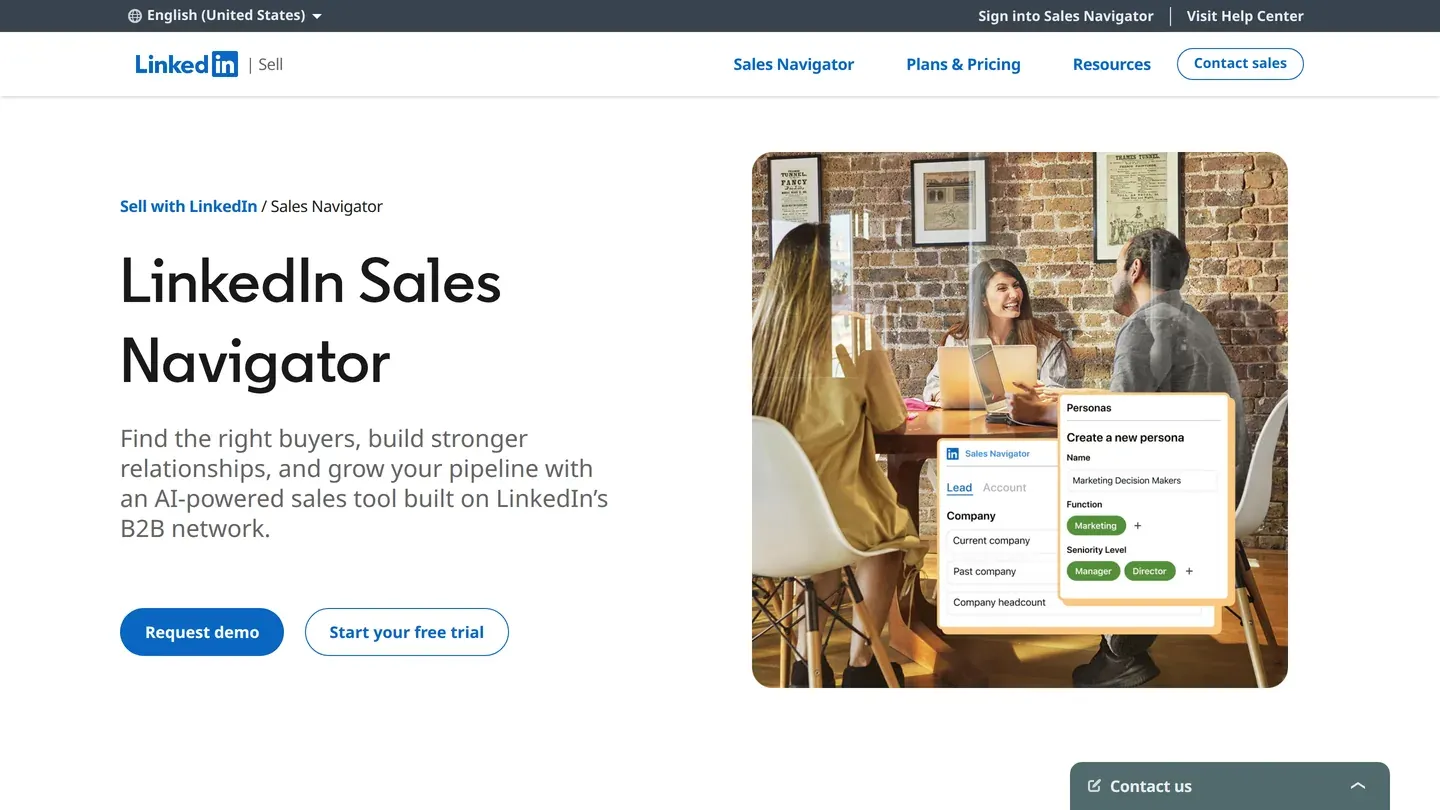
Replaces. The search half of the database job: finding the right people with the 50+ advanced search filters LinkedIn lists.
Price. On LinkedIn's compare-plans page, Core is US$119.99 a month or US$1,079.88 a year, and Advanced is US$159.99 a month or US$1,799.88 a year. Advanced Plus is priced to your team. The page calls its prices estimates.
One credit. There are no credits. The page lists no email addresses or phone numbers, so a seat pairs with a finder or scraper.
Falls short of ZoomInfo. Buyer Intent is ticked on Advanced and Advanced Plus, not on Core's US$1,079.88.
9. WizLeads: Sales Navigator searches plus work emails
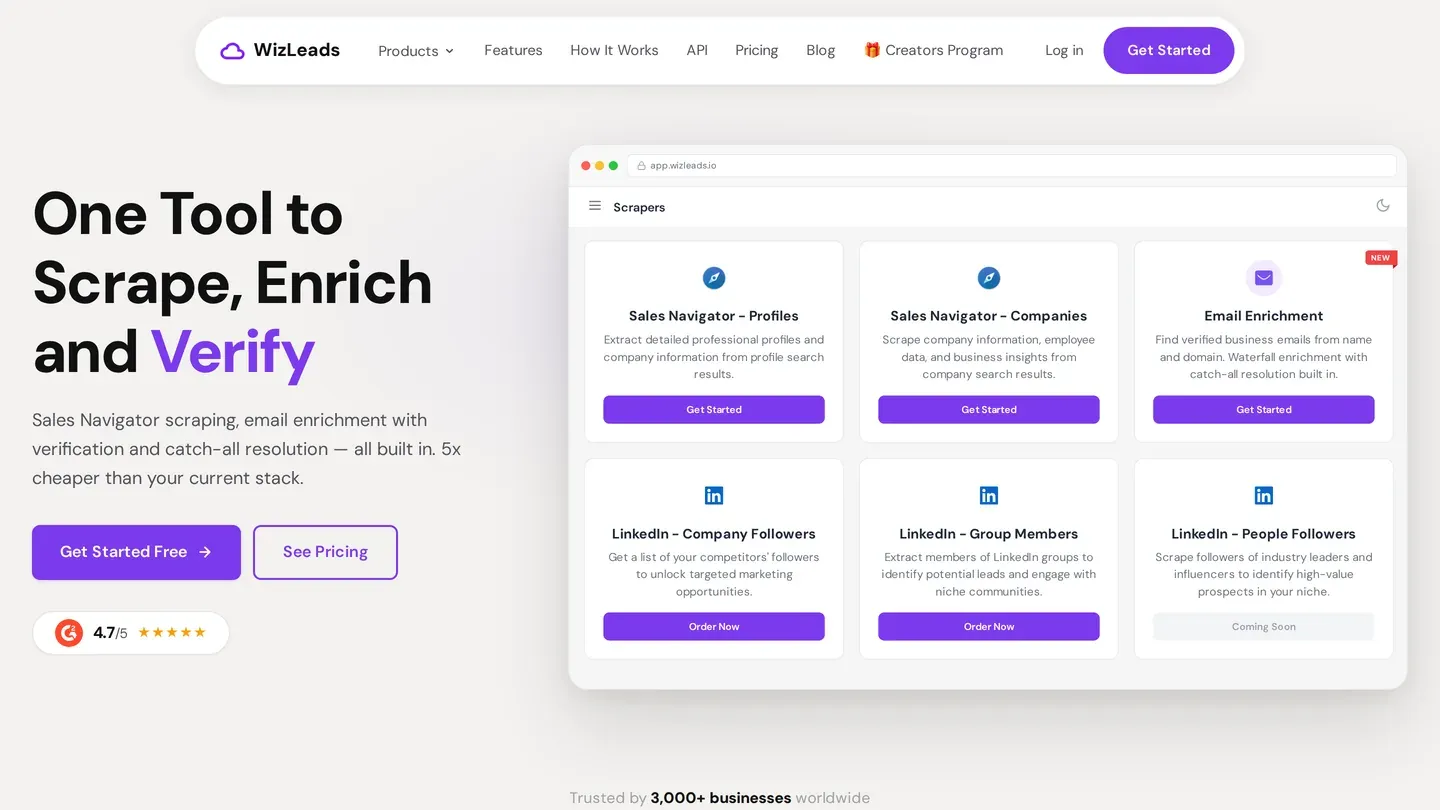
Replaces. The job of finding the right people and getting their work emails, when the search runs in Sales Navigator. WizLeads scrapes a Sales Navigator search in the cloud and finds work emails for the people it returns. It needs a Sales Navigator search URL, so someone has to build the search in Sales Navigator first.
Price. On WizLeads' homepage plan cards, billed monthly, Freelancer is $39 for 10,000 credits, Agency is $99 for 40,000, Cartel is $199 for 100,000 and Kingpin is $499 for 300,000. Freelancer is $468 a year at list price, or $1,547.88 with a Sales Navigator Core seat. New accounts get 500 credits once, about 166 emails found. Extra credits cost $5 per 1,000, bought in Billing.
One credit. Scraping costs 1 credit per lead with your LinkedIn account connected and 2 in account-less mode. A work email costs 3 credits per email found and nothing for a miss. Verifying a list costs 0.5 credit per email, whatever the result. With your account connected and a 60% find rate, 10,000 credits cover about 3,571 leads and 2,143 emails. That is an estimate, not a bill. A task holds 3 credits per row up front, so run big jobs in batches.
Falls short of ZoomInfo. It has no intent data, org charts or technographics. A phone number costs 100 credits when found, so it is not a dialling tool. It has no database to query without a Sales Navigator search. A people search returns at most 2,500 results, and automatic splitting starts on Agency.
10. Hunter: emails for names and domains you already have
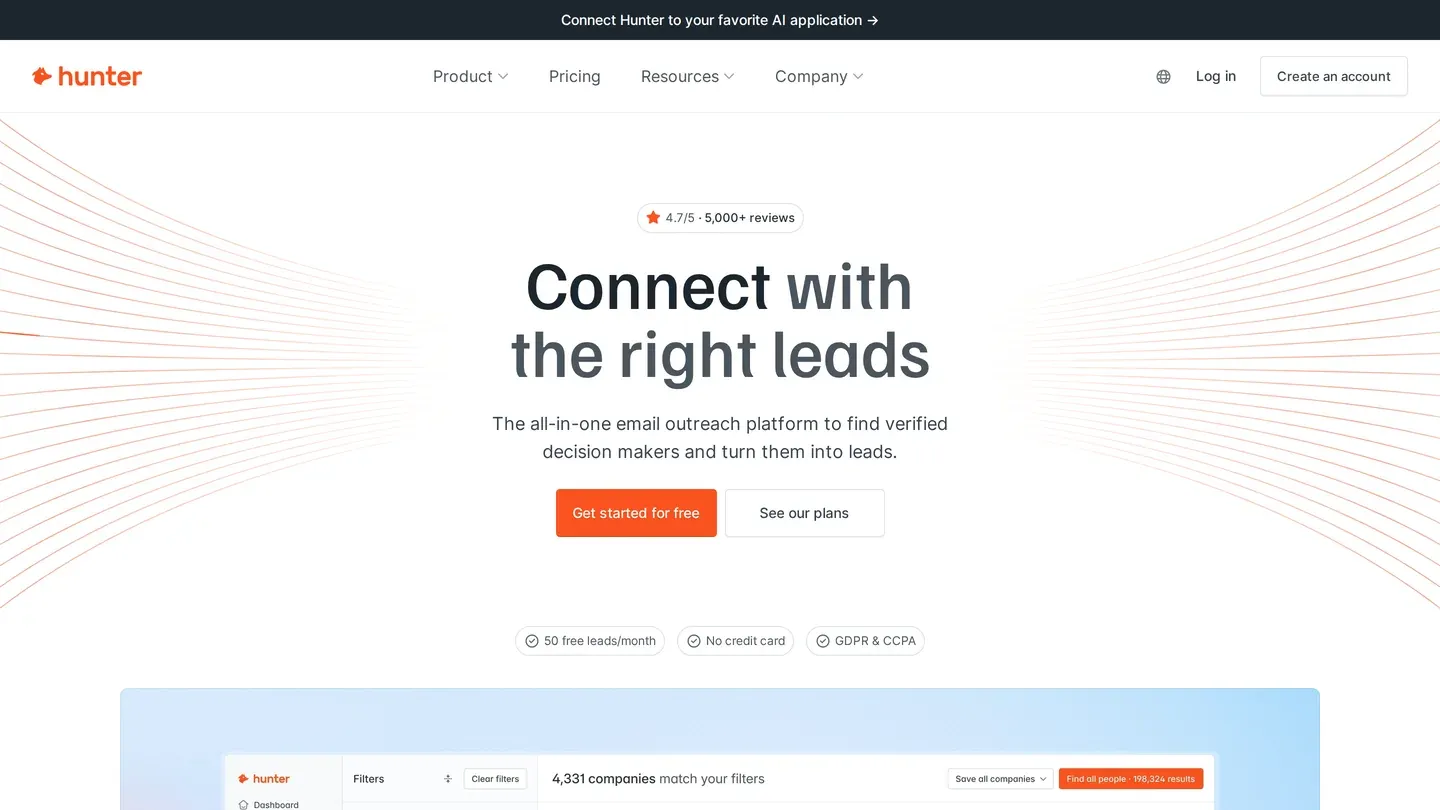
Replaces. Finding and verifying emails when you already know the company or the person.
Price. On Hunter's pricing page, billed yearly (the toggle shows -30%), Starter is $34 a month for 2,000 credits a month. Growth is $104 for 10,000 and Scale is $209 for 25,000. Monthly billing is $49, $149 and $299. Starter billed yearly is $408 a year for 24,000 credits. Free is 50 credits a month.
One credit. An email found costs 1 credit and an email verified costs 0.5 credit, from one pool. Hunter says no credits are used when Domain Search finds no emails.
Falls short of ZoomInfo. Its credit rates list only emails found and emails verified, so you bring names or domains and get emails back.
Is a ZoomInfo alternative really 10x cheaper?
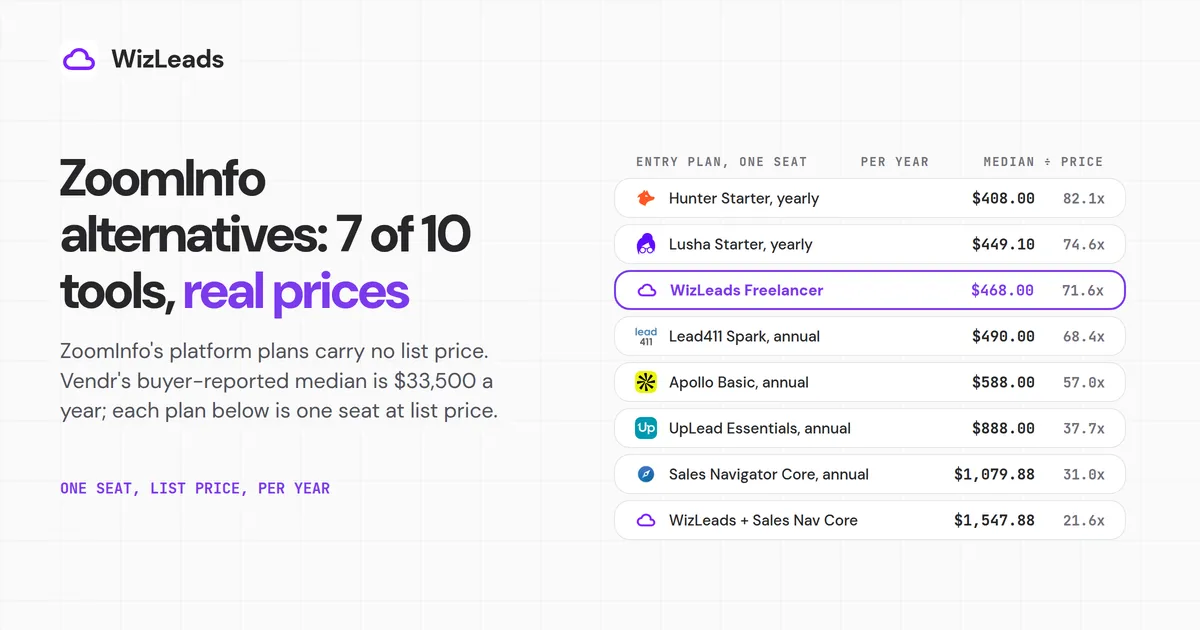
If you want a cheaper alternative to ZoomInfo, the strongest case this list supports is one seat for a year at list price. It is set against a typical buyer contract. The table uses Vendr's buyer-reported median of $33,500 a year. Ten times cheaper than the median is $3,350 or less.
| Entry plan, one seat, list price | Per year | Median ÷ price |
|---|---|---|
| Hunter Starter, billed yearly | $408.00 | 82.1x |
| Lusha Starter, billed yearly | $449.10 | 74.6x |
| WizLeads Freelancer, monthly billing | $468.00 | 71.6x |
| Lead411 Spark, annual | $490.00 | 68.4x |
| Apollo Basic, billed annually | $588.00 | 57.0x |
| UpLead Essentials, billed annually | $888.00 | 37.7x |
| Sales Navigator Core, annual | $1,079.88 | 31.0x |
| WizLeads Freelancer plus Sales Navigator Core | $1,547.88 | 21.6x |
All seven priced entry plans clear 10x against the median. Lusha Premium at $3,599.10 a year and Apollo Organization at $4,284 fail even against the median. Cognism, Seamless.AI and SalesIntel publish no price, so the table cannot place them.
Per record, 10x does not hold. UpLead's annual credit is $0.4353 per contact, above the $0.38 a record on ZoomInfo's GTM AI page at its $1,000 tier. A contact and a record are different units, and the median contract covers seats, credits and modules that Vendr does not publish. So the table compares a seat-year with a median contract, not a saving you will book.
When ZoomInfo is still the right call
Keep ZoomInfo, or move to a quote-only peer, if your RevOps or marketing team feeds intent signals, org charts and technographics into routing, scoring or account-based campaigns. On the pages we read, Cognism lists intent on Pro and SalesIntel includes basic intent. Annual Lead411 Spark lists buyer intent data, and Sales Navigator Advanced ticks Buyer Intent. WizLeads lists none of these.
Coverage also differs by segment. Run the same list of target accounts through each trial before you trust a cheaper database with your market.
Leaving ZoomInfo without a gap
- Find your renewal date and notice period in the Ordering Document. Under the current license terms the agreement "is not cancellable", so the renewal date is your exit.
- Opt out of auto-renewal at least 60 days early in the Billing Portal, as a ZoomInfo admin, if your account is enrolled. Once it is turned off it cannot be turned back on.
- Run the replacement in parallel on one segment of your ICP, and compare valid emails per 100 contacts, bounce rate and reply rate before the ZoomInfo seat lapses.
- Ask the replacement about your remaining term. Lead411's FAQ says that in certain cases it buys out an existing B2B data provider contract.
Other ZoomInfo competitors we left out: RocketReach prices by visitor country, so we did not quote one country's page. Clay is a table-based enrichment platform that calls data providers, so it sits beside a database. 6sense, Demandbase and Bombora cover the intent and account-based layer, a separate job from contact data.