WizLeads


Intent data is a signal that an account is researching a topic or a product. Intent data providers sell that signal, and they differ in where they collect it: a co-op of publisher sites, the ad bidstream, a review site, their own readers, or your website. Of the ten we read, six sell intent on a quote, TrustRadius shows no price, and ZoomInfo, Apollo and HubSpot put it inside a credit, a seat plan or a hub plan. Most B2B intent data arrives at company level, so it hands you accounts, not people.
We put the ten side by side on the same four slots: what each collects, at what level, what its price status is, and what to watch. Where vendors disagree about their own category, we name both sides.
How we picked and checked these ten
We picked providers that the pages ranking for "intent data providers" keep naming, plus the two contact databases that resell Bombora data and the intent a CRM gives you for free. The criterion is where the signal is collected, written in the vendor's own words and linked in the same sentence, followed by a price status that rests on evidence. "No price" means we saw a rendered pricing page or a contact-sales button with no figure. A page we could not load stays unverified and is left out.
Prices are as of October 2026. Every figure is the named party's own claim, and vendor counts (topics, sites, devices) are claims we could not test. We tested none of these products. Nothing here ranks signal quality.
First-, second- and third-party intent data: where the signal comes from
Buyer intent data comes in three types by owner. Bombora defines first-party intent as "data signals collected from prospects and customers engaging with a company's owned or paid experiences." That is your own site, your emails and your ads. Demandbase adds a second-party type: "another organization's first-party data" shared "through a direct partnership," such as a publisher or review platform. 6sense describes third-party intent as research and buying activity "across channels owned by other organizations, such as 6sense."
Bombora's taxonomy splits third party intent data into three sources: the Data Cooperative, publisher direct and bidstream. That split gives you the question to ask each provider. A co-op measures behavior on member sites. Publisher direct measures one publisher's own audience. Bidstream data is the information passed between sites and ad exchanges when an ad slot is auctioned.
Two disagreements sit inside this taxonomy, and both are vendor positions rather than facts we could test.
Is G2 first-party or second-party? G2 says that "only G2 provides verified, first-party intent data" (G2's data page). G2 counts from its own property, where the activity happens. 6sense calls review-site data second-party and names G2, TrustRadius, Peerspot and Gartner Digital Markets, and Demandbase's definition puts a review platform in the same bucket. The two labels describe the same kind of data, counted from different sides: G2's property, or the buyer's view of another organization's data.
Is bidstream the best source or the weakest? Demandbase says it pairs technology that identifies unknown accounts with "direct access to the bidstream," which it calls "the source for the most intent signals" (Demandbase intent page). Bombora calls bidstream "fragmented, surface-level data" (Bombora). Each vendor is describing its own approach. If a vendor leans on bidstream, ask it what share of its signals comes from that source and how it resolves a bid request to a company.
The ten intent data providers at a glance
Table 1 groups the ten by where each says it collects. The Level column says whether the signal points at a company or a named contact.
| Provider | Source type | How it says it collects | Level |
|---|---|---|---|
| Bombora | Third-party co-op | Member sites plus a proprietary tag | Company |
| 6sense | Third-party keywords, web deanonymization, imports | Custom keyword tracking | Company |
| Demandbase | Third-party bidstream plus NLP, imports | Bidstream access, imported partner intent | Company |
| ZoomInfo | Third-party device and IP matching | IP-to-organization and keyword-to-device pairings | Company, contact pitched |
| Informa TechTarget | Publisher direct | Its own opted-in audience | Contact (Prospect-Level Intent) |
| G2 | Review site | Activity on G2's sites | Company |
| TrustRadius | Review site | Activity on TrustRadius | Company |
| Apollo | Resold Bombora | Bombora score inside Apollo | Company |
| Cognism | Resold Bombora | Company Surge inside Cognism | Company |
| HubSpot | First-party plus research ecosystem | Your tracking code, plus opted-in sites | Company |
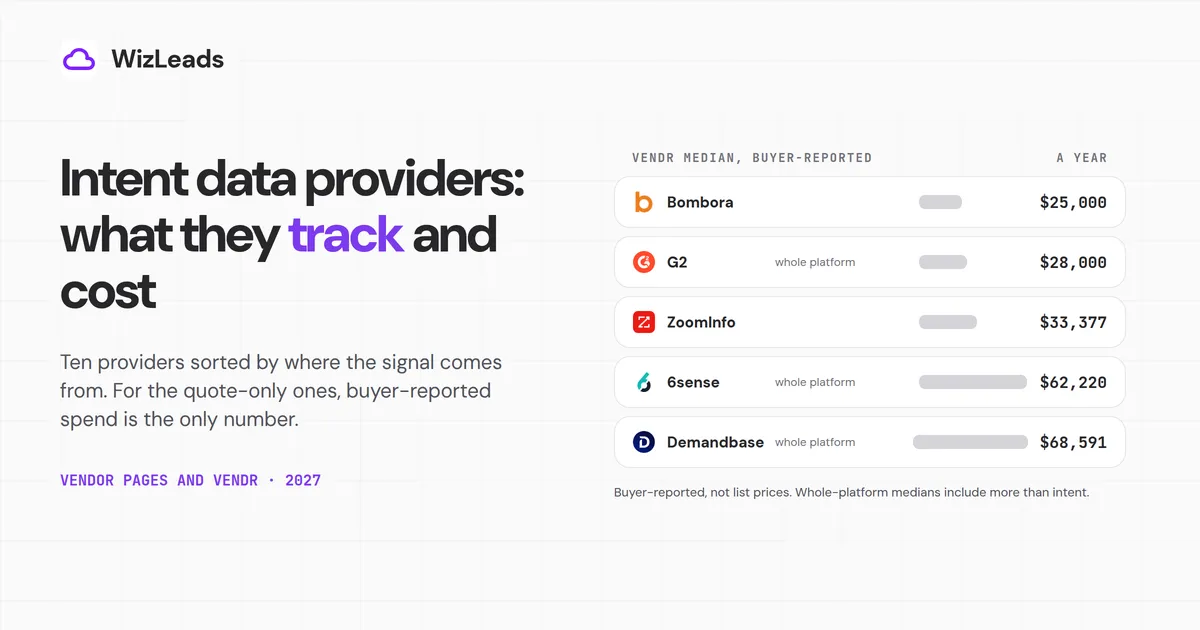
Table 2 shows price status, with Vendr's figures. "Published" means a figure on the vendor's own page. Vendr medians are buyer-reported marketplace figures, not list prices.
| Provider | Published price | Vendr median, buyer-reported |
|---|---|---|
| Bombora | None | $25,000 a year |
| 6sense | None | $62,220 a year, whole platform |
| Demandbase | None | $68,591 a year, whole platform |
| ZoomInfo | GTM AI credits only | $33,377 a year |
| Informa TechTarget | None | Not read |
| G2 | Starter has a price but no intent; intent is a quote-only add-on | $28,000 a year, whole platform |
| TrustRadius | No price shown on its paid cards | Not read |
| Apollo | Per-seat plans with intent topics | Not read |
| Cognism | None | Not read |
| HubSpot | In hub plans, with HubSpot Credits | Not read |
Sources and dates are in each entry below.
Third-party intent data providers
Bombora
Source: Bombora homepage.
- Collects: Bombora says it has "direct relationships with Co-op members and a proprietary Javascript tag on their websites," and that 86% of its Co-op data is exclusive to Bombora (Bombora Co-op). Both are Bombora's claims.
- Level: Company.
- Price status: None published. Bombora's pricing URL redirects to the Co-op page, whose calls to action are "Speak to an expert" and "Speak to a Data Co-op expert," with no price. Vendr's buyer-reported median is $25,000 a year (Vendr).
- Watch: Topic counts for Bombora intent data depend on who says them. Bombora says it tracks 25,300+ intent topics. Apollo writes that Bombora "claims coverage across 21,600+" topics and that Apollo itself includes 15K+. We are not picking one. Check the topic list for your category rather than the headline count.
6sense
- Collects: 6sense says its native intent comes from custom keywords: "an unlimited number of custom search keywords" in over forty languages, plus partnerships with "Bombora, TechTarget, TrustRadius, and G2" (6sense intent page).
- Level: Company.
- Price status: None published. The pricing page shows a "Get a quote for your team" form, three starting points (Revenue Marketing, Sales Intelligence and 6sense Intelligence) and add-ons that include a "Bombora Topic Pack," with no plan price (6sense pricing). Vendr's buyer-reported median is $62,220 a year for the whole platform, so it is not an intent-only price (Vendr).
- Watch: 6sense imports other providers' signals alongside its own, so ask which signals are native and which come from partners.
Demandbase
Source: Demandbase homepage.
- Collects: Demandbase says "we own the technology to identify unknown accounts" and pairs it with "direct access to the bidstream," and it imports Bombora Surge, G2 and TrustRadius intent (Demandbase intent page).
- Level: Company.
- Price status: None published. The pricing page says "Fill out the form" for a custom plan and describes a platform fee plus a flat fee per user (Demandbase pricing). Vendr's buyer-reported median is $68,591 a year for the whole platform (Vendr).
- Watch: This is the bidstream side of the disagreement above. A platform fee plus per-user fees means intent is one part of a larger bill.
ZoomInfo
Source: ZoomInfo pricing page; prices below.
- Collects: ZoomInfo says its intent engine tracks signals "from a network of 210 million IP to Org Pairings and more than 6 trillion new keyword-to-device pairings," sourced monthly from "over 90% of accessible devices across the U.S." (ZoomInfo intent data). It publishes no method behind those counts.
- Level: Company, with named contacts pitched through its database.
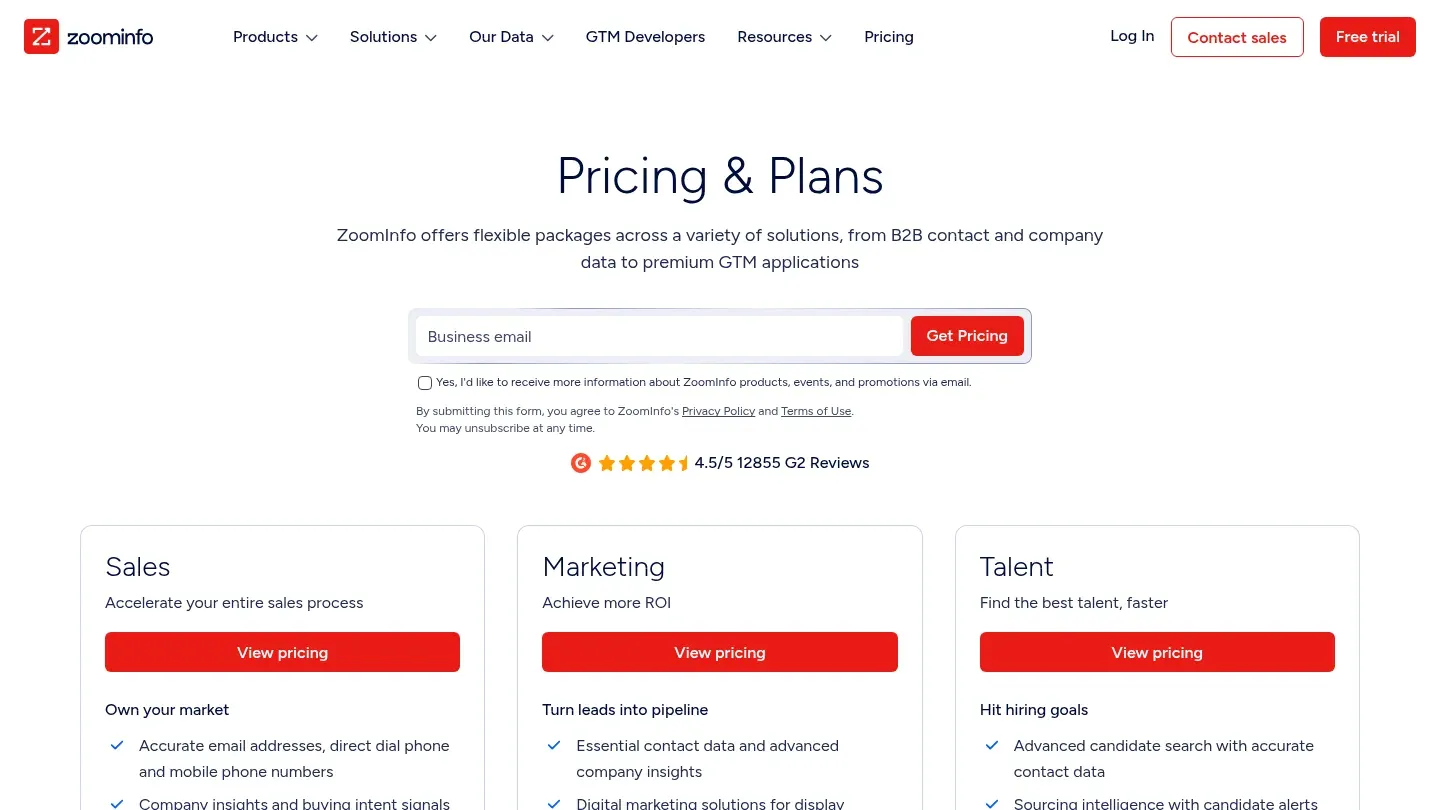
- Price status: Platform packages are quote-only, and Streaming Intent is priced on keyword volume and account universe (ZoomInfo pricing). Its GTM AI product publishes a credit ladder from $0.45 down to $0.25 a credit, with $0.38 at the $1,000 spend tier, and one credit covers a company, contact or intent record (GTM AI pricing). At the $0.38 tier, pro-rata, 1,000 intent records is a $380 unit cost, not a bill. Vendr's buyer-reported median for ZoomInfo is $33,377 a year (Vendr).
- Watch: ZoomInfo intent data sits inside the database and the packages, so check how many intent topics your package includes before you compare it with a stand-alone feed.
Informa TechTarget
Source: Informa TechTarget Buyer Intelligence page.
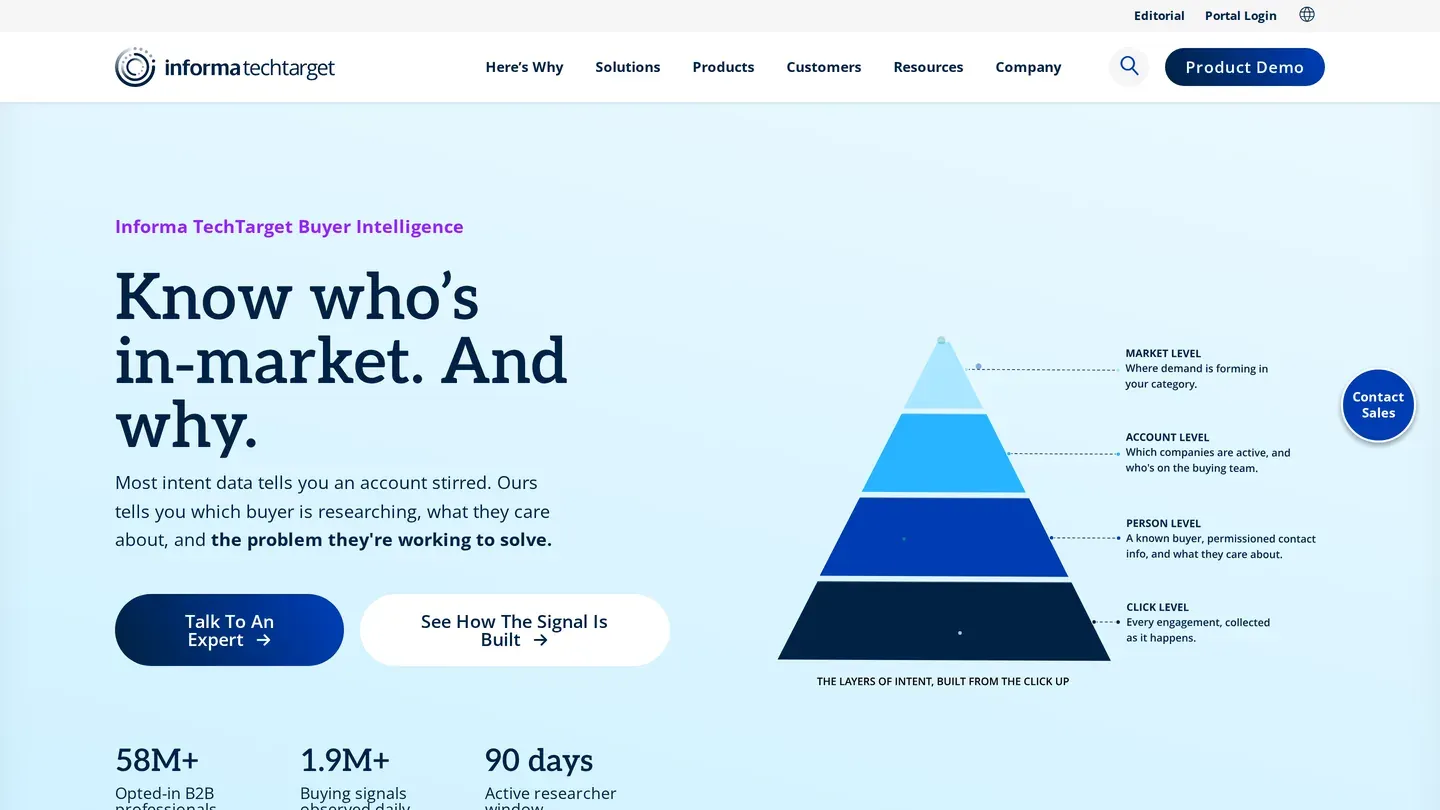
- Collects: Informa TechTarget says its signals "aren't bought or brokered" and come "exclusively from our own global audience of engaged B2B decision-makers" reading its editorial and webinar content (Informa TechTarget Buyer Intelligence). It claims 58M+ opted-in professionals.
- Level: Contact, through what it calls Prospect-Level Intent.
- Price status: None published. The Intent Data for Sales page offers "Request a Demo" and contact-sales buttons (Informa TechTarget).
- Watch: The audience is people who read technology publications, so check that your buyers are among them. A publisher-direct feed covers only the publisher's own readers.
Review-site intent: G2 and TrustRadius
G2
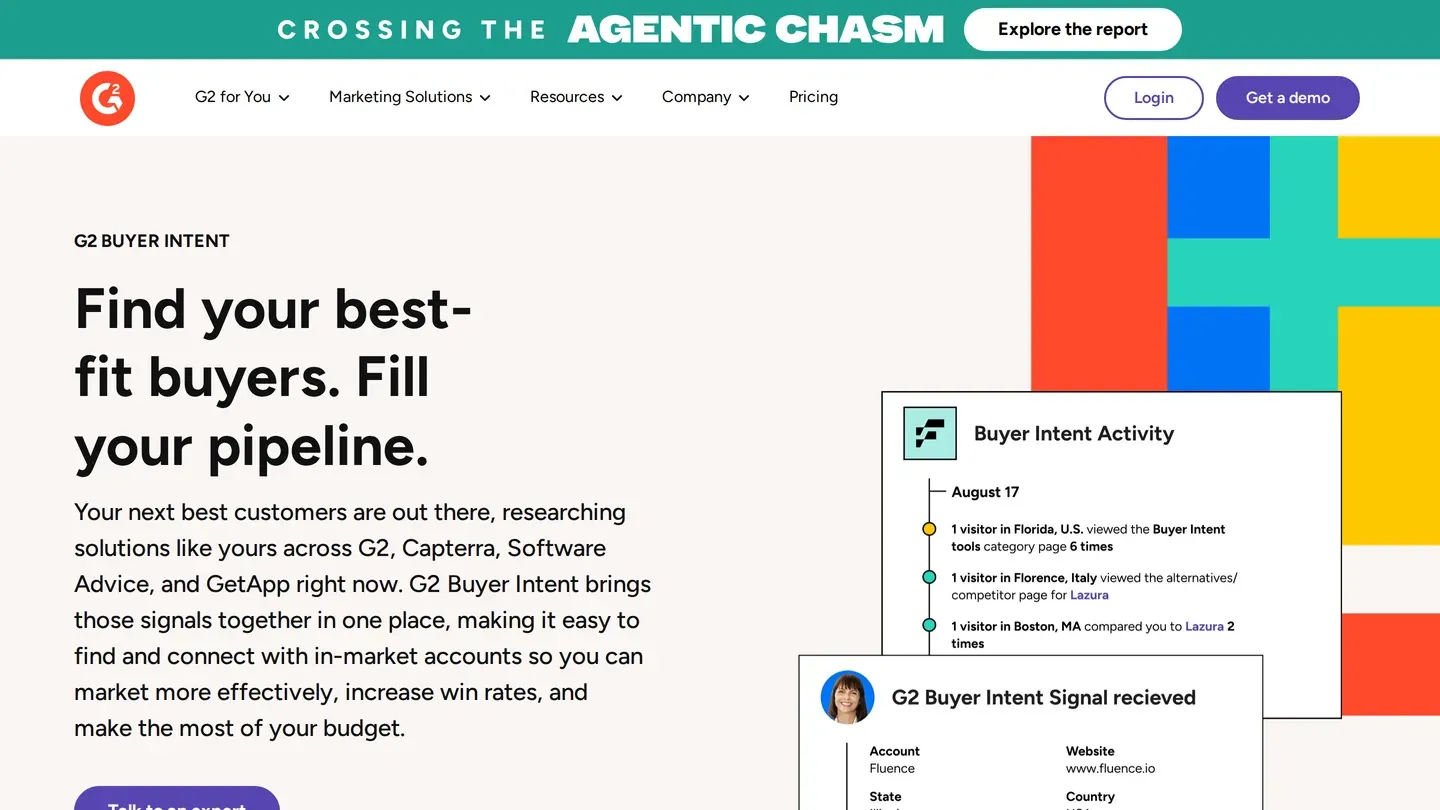
Source: G2 Buyer Intent page.
- Collects: G2 says its Buyer Intent signals "are generated from high-intent actions," including product and category page views, competitor comparisons, pricing page engagement, and review consumption and contribution (G2 data). It claims over 200 million software buyers a year across G2, Capterra, Software Advice and GetApp.
- Level: Company.
- Price status: G2's own page shows Starter at $299 a month or $2,999 a year for year 1 (G2 says year 2 rises to $599 a month or $6,000 a year) with no Buyer Intent, and Buyer Intent as an "Add-on" under Professional and Enterprise, both "Contact sales" (G2 plans). Vendr's buyer-reported median is $28,000 a year for the whole platform, meaning all G2 products and not Buyer Intent alone (Vendr).
- Watch: G2 buyer intent shows who is evaluating software in your category on G2. It says nothing about buyers who never visit a review site.
TrustRadius
- Collects: TrustRadius says its downstream intent signals "aren't muddied with other site and blog traffic or third-party sources" (TrustRadius downstream intent). That is activity on TrustRadius itself.
- Level: Company.
- Price status: None shown. TrustRadius is now HG Customer Voice, part of HG Insights, and its paid cards render with no price (HG Customer Voice pricing). We could not confirm which tier includes intent, so we do not state one.
- Watch: The product has been renamed, so search for HG Customer Voice as well as TrustRadius when you compare notes with a vendor.
Intent data inside a contact database
Apollo
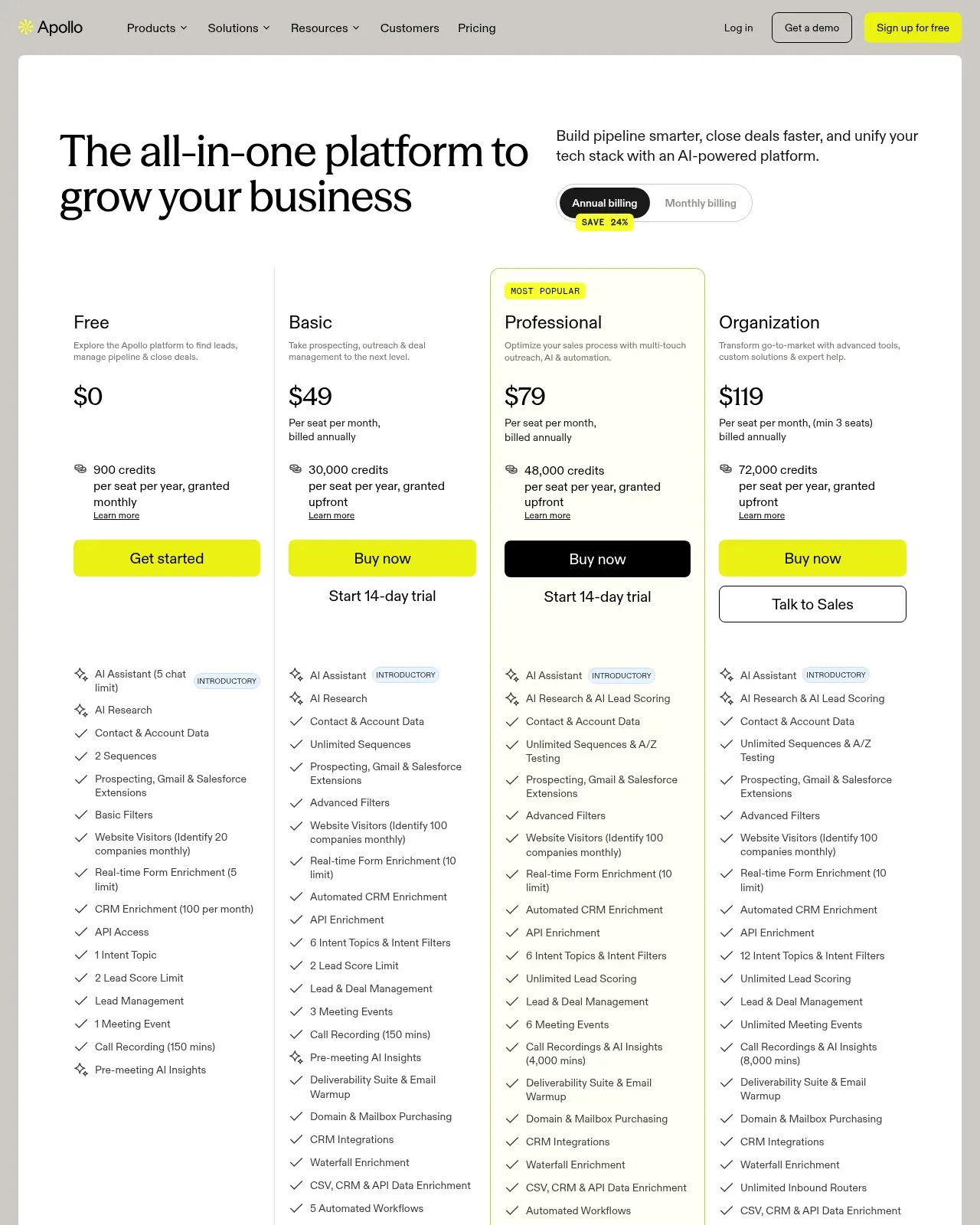
Source: Apollo pricing page; prices below.
- Collects: Apollo's help center says "Bombora provides company-level buying intent scores," refreshed weekly, with high intent at 75 to 100 and medium at 61 to 74 (Apollo knowledge base).
- Level: Company.
- Price status: Published. Apollo's pricing page lists 1 intent topic on Free, 6 on Basic and Professional, and 12 on Organization (Apollo pricing). Annual plan prices are $49, $79 and $119 per seat a month for Basic, Professional and Organization (Organization has a three-seat minimum).
- Watch: Topic slots are capped by plan, so choose them against your offer before you buy.
Cognism
Source: Cognism pricing page; price status below.
- Collects: Cognism says it uses "Bombora's Company Surge data" and lets administrators "select up to 12 intent topics from a library of over 11,000 options" (Cognism pricing). That library size is Cognism's number and differs from Bombora's and Apollo's.
- Level: Company.
- Price status: None published. Packages say "Talk to sales," and intent is listed under the Pro package (Cognism pricing).
- Watch: The same Bombora source is also sold through Apollo with a published seat price, so compare what else each package includes before you ask for a quote.
First-party intent: your own site, LinkedIn and visitor ID
HubSpot
Source: HubSpot homepage.
- Collects: HubSpot says buyer intent works because "the HubSpot tracking code installed on your website collects visitor data" (HubSpot buyer intent). Its research intent is "powered by HubSpot's proprietary intent ecosystem of 200,000+ websites," each running the tracking code and opted into intent access (HubSpot research intent).
- Level: Company.
- Price status: Buyer intent is available on Starter, Professional and Enterprise hubs, and adding and tracking companies uses HubSpot Credits (HubSpot buyer intent). We did not fetch the credit cost, so we state none.
- Watch: First party intent data only sees accounts that already touch your site, so filling in contact data is a separate HubSpot enrichment job.
LinkedIn's filter and visitor-ID tools
LinkedIn's Sales Navigator Buyer intent filter is first-party to LinkedIn and only measures interest in your company, from employee interactions, InMail acceptances, ads engagement and company page engagement. Visitor-ID tools sell first-party data too. RB2B lists a free plan at 150 monthly company-level resolutions, with Starter at $79 a month. Leadfeeder lists a free Lite plan for 100 companies a month and Discover from $79 a month billed annually.
What intent data costs
Three price shapes appear in the ten. Published per unit or per seat: ZoomInfo's GTM AI credit ($0.45 down to $0.25) and Apollo's seat plans with a topic allowance. Published but bundled: HubSpot, where intent sits inside hub plans and uses credits. Quote-only: Bombora, 6sense, Demandbase, Informa TechTarget, Cognism and G2's Buyer Intent add-on, since G2's published Starter plan has no intent. TrustRadius shows no price on its paid cards. Our Cognism pricing breakdown prices every Cognism plan.
For the quote-only group, the only numbers are buyer-reported. Vendr's medians are $25,000 a year for Bombora, $62,220 for 6sense, $68,591 for Demandbase and $28,000 for G2. The 6sense, Demandbase and G2 figures are for the whole platform, so each includes products beyond intent. Each also comes with a Low and a High that Vendr prints beside the median. They are labels, not percentiles, and we do not use them as a range. We did not read Vendr or any marketplace page for Informa TechTarget or TrustRadius, so we give no figure.
We state no per-topic or per-account intent price for any quote-only vendor, because none of them publishes one and any figure would be a guess. Ask for the price per topic or per tracked account in writing, along with what the contract term and user count change.
How to shortlist intent data providers
Start from the signal you are missing, then use price status to decide who to call.
- Your own site already has traffic: begin with first-party intent. HubSpot's buyer intent reads your tracking code, and a visitor-ID tool lists its plan prices, so you can test before any sales call.
- You are watching comparison shoppers: G2 and TrustRadius collect on their own sites. Ask whether your category has enough traffic there to produce a list worth working.
- You need broad third-party coverage: Bombora, 6sense, Demandbase and ZoomInfo each describe a different collection method. Ask each one how many of its signals come from that source, and which signals are imported from partners.
- You already pay for a contact database: check what intent your plan includes. Apollo publishes topic counts by plan, and Cognism lists intent under its Pro package.
Whichever you pick, ask for three things in writing: the topic or keyword limit, the account universe it covers, and whether the quote covers intent alone or the whole platform.
After intent names the accounts: find the people
Company-level intent gives you a list of accounts. Apollo says outright that its scores are company-level, and Bombora scores companies too. The work that follows is picking roles at those accounts and getting a verified work email for each, which is data enrichment plus choosing which fields a record needs.
WizLeads is not an intent provider and sells no intent signal. It starts after intent has named the accounts. You build a Sales Navigator search for the roles you want at those companies, WizLeads scrapes it, and it finds work emails from a first name and a company website. Scraping costs 1 credit per result with your own LinkedIn account connected, or 2 credits account-less. A work email costs 3 credits per email found, and misses are free. On the Freelancer plan, $39 for 10,000 credits, that is about $7.80 per 1,000 leads scraped account-less and about $11.70 per 1,000 emails found. Both are pro-rata unit costs, not bills, and the Sales Navigator seat comes on top.
Two limits matter. WizLeads needs a Sales Navigator search or list URL to start (how to export from Sales Navigator), and a saved account list needs your own LinkedIn account connected.